
The Tools We Use to Review a Broadcast Audio Chain
A look at the meters, test signals and listening methods we rely on when we assess a studio or live audio chain, and why we trust them over assumptions made on the day.
Starting with a signal path drawing
Before anyone touches a fader, we ask for the signal path on paper. Every microphone, preamp, converter, console input, bus, monitor feed and send to the outside world should appear as a box with a line to the next one. Where no drawing exists, we sketch one on site with the audio team, and that exercise alone often turns up a forgotten insert or a feed that splits in two places. The drawing is our main working tool because it lets us reason about gain, latency and routing without guessing. A chain that looks tidy in the control room can hide a sample rate mismatch between two rooms or a mono sum that nobody remembers adding. Once the path is drawn, we mark where levels are set and who owns each stage.
We keep the format plain: a single sheet, one line per signal, labels written the way the crew actually says them. Crews will not maintain a diagram that uses unfamiliar notation, so we use the names already painted on the patch bay. When a studio is rebuilt or a live event is added to the schedule, the same sheet becomes the starting point for the next review rather than a document filed away and lost.
- Every source and destination named as the crew names it
- Sample rates and clock source noted at each stage
- Points where signals are summed, split or processed marked clearly
- One owner written against each gain stage
Test signals and meters we trust
For measurement we lean on a small set of dependable items: a signal generator that produces sine, pink noise and sweeps, a pair of reliable meters, and a loudness meter set to the standard the broadcaster delivers to. Nothing exotic. The value lies in applying the same signals at the same points each time, so that two readings taken months apart can be compared fairly.
We inject a known tone at the first input and follow it through the chain, noting level, noise floor and any change in frequency response at each stage. A fault that is hard to hear in programme material shows up quickly as a dip or a hum on a steady test signal. We also check polarity across the chain, since a single reversed cable can leave a presenter sounding thin only when two microphones are open together.
- Sine tones for level alignment and polarity checks
- Pink noise for room and monitor response
- Sweeps for spotting frequency response changes
- Loudness metering matched to the delivery specification
Console settings recorded, not remembered
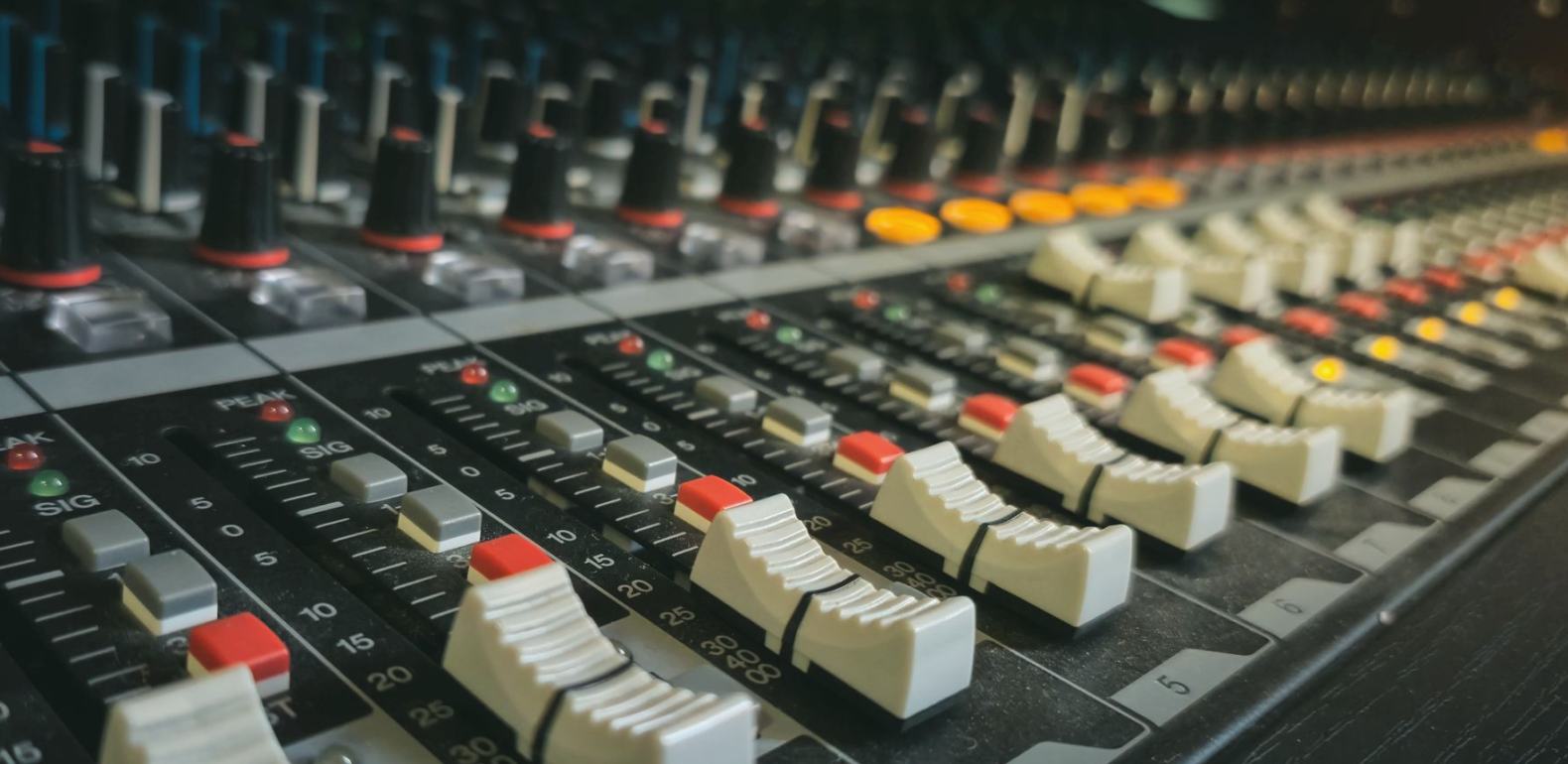
A mixing console holds a great deal of state, and much of it is invisible to the person who inherits the desk. Before suggesting changes, we photograph or export the current settings: input gains, equaliser and dynamics, bus assignments, monitor routing and any stored scenes. We treat that record as the baseline, because a recommendation made without it cannot be undone cleanly if the crew prefers the old behaviour.
We also ask which settings are protected and which are changed freely by each shift. A console recalled to a clean scene before every programme is a different problem from one left as the last operator left it. Understanding this tells us whether the remedy is a technical adjustment, a short written procedure, or a change in how scenes are named and locked.
Listening with a reference we know well
Measurements tell us what the chain does, but monitoring decides what the crew believes it is doing. We therefore bring a short set of familiar reference material, mixed from sources that carry speech, music and a few seconds of near silence, and play it through each monitoring position. The material stays the same from room to room, which lets us hear how the gallery, the studio floor and the edit room differ from one another.
A monitor system that flatters the mix is a real hazard, because balance decisions made on it will not travel. We listen at a calm, steady level for a while before comparing, since ears adjust quickly. If two rooms in one facility disagree noticeably, the first step is to check placement and gain staging before anyone considers replacing speakers.
- Same reference material played in every monitoring room
- Short listening periods at a fixed, comfortable level
- Placement and gain checked before any equipment change
Communications and the human side of the chain
An audio chain extends past the console to the talkback, the interruptible foldback and the feeds that producers and directors rely on. We trace these as carefully as programme audio, because a muffled talkback line slows a live show far more than a slightly noisy microphone. During a review we ask the crew which circuit they trust least and start there.
We also walk through who needs to hear what at each stage of a rehearsal and a transmission. Roles on a live event are often shared, and a feed assigned to one person during setup may be needed by two during the show. Writing this down in plain terms, alongside the signal drawing, gives the team a common reference and cuts the number of verbal questions during critical moments.
How we report what we find
The result of a review is a short written note for the technical director and the facilities manager, built around the same drawing we began with. It lists what we measured, what we heard, what we recommend and in what order, with the reasoning stated so that your own engineers can disagree with it sensibly. Where a fault is clear, we say so; where a choice depends on how you work, we describe the trade-offs.
We keep recommendations modest and separable, so that a small fix does not wait on a larger project. Some studios need only a corrected clock setting and a labelled patch bay; others benefit from a revised monitoring layout. Either way, the aim is that your crew can repeat our checks themselves long after the visit has ended.
None of these tools is complicated, and that is deliberate. A drawn signal path, steady test signals, recorded console settings and familiar listening material give an audio team something firm to work from and to repeat. If you are weighing up a review of your own studio or live setup, the contact page is the place to describe the chain you have and the problem you are chasing.
Further reading
What we look at first when a studio floor plan lands on our desk
A note from the consultancy on how we are approaching Broadcast Studio Design enquiries in these weeks: the questions we ask, the drawings we want to see, and what a first review covers.
A Monitoring Fix for a Regional Talk Show Gallery
Priya recounts how Marcus, a technical director at a regional talk show, tracked a recurring audio problem to the monitoring chain and what changed once the gallery listened differently.